

Finishing a degree is a major milestone. But for many graduates, it also brings an important question: What next?
A degree can give you an academic foundation, but your career does not always have to follow the exact path you studied. If you are passionate about design, creativity and making ideas come to life, there are opportunities to build a career beyond your existing degree.
Today, creative industries in India are opening doors across fashion design, interior design, graphic design, communication design, photography, product design, styling, beauty, culinary arts and other creative fields. For graduates who want to explore something different, creative education can be a practical way to develop new skills and move towards a career they genuinely enjoy.
The idea is simple: your degree is not the end of your career journey. It can be the beginning of a new one.
Your Degree Does Not Define Your Entire Career
Many students choose a degree based on their academic interests, family expectations or the career opportunities they see at that time. But interests can change.
You may have completed a degree in commerce and discovered a passion for fashion. You may have studied engineering but enjoy designing spaces. You may have completed a general degree and realised that your strengths are in visual communication, photography or branding.
This does not mean your previous education has gone to waste.
Your existing degree can give you transferable skills such as communication, research, organisation, analytical thinking and problem-solving. A creative course can then help you develop the specialised knowledge and practical abilities required for a new career direction.
This is where creative education in India can play an important role.
Instead of asking, “What can I do with the degree I already have?”, you can also ask:
“What career do I want to build from here?”
Why Choose a Creative Career?
Creativity is no longer limited to traditional art-based professions. Modern creative careers combine imagination with technology, business and industry knowledge.
A fashion designer may work with digital design tools, trend forecasting and brand strategy. An interior designer may use 3D visualisation, CAD software and project management. A graphic designer may work on digital branding, social media campaigns and user experiences.
This means today’s creative careers require more than talent.
They require the ability to learn, experiment, communicate ideas and understand how creativity works in the real world.
For young graduates, this creates exciting possibilities.
You can choose to work with established brands, design studios, agencies, retail companies or creative businesses. You can also explore freelancing or eventually build your own creative venture.
The choice is yours.
Creative Education Can Help You Start From Where You Are
One of the biggest concerns graduates have when considering a career switch is:
“I don’t have a creative background. Can I still learn?”
The answer is that creative skills can be developed.
A structured creative course can take learners through the fundamentals before introducing more advanced concepts. This is particularly useful for students who are starting from scratch or professionals who want to transition into a new field.
For example, someone exploring fashion design courses in India can begin by understanding design fundamentals, fabrics, garment construction, styling and fashion trends before progressing towards more specialised areas.
Similarly, someone interested in interior design courses can develop knowledge of space planning, materials, colour, furniture, lighting, digital tools and project execution.
The important thing is to choose learning that combines creative knowledge with practical experience.
From Basic Skills to Advanced Creative Expertise
Creative careers are built through continuous learning.
You do not need to know everything on day one. What matters is having the willingness to learn and improve.
A good learning journey can take you from:
Understanding → Practising → Creating → Building a Portfolio → Gaining Industry Exposure → Starting Your Career
At the beginning, you may learn basic design principles and creative techniques. With practice, you can start working on projects and experimenting with your own ideas.
Over time, these projects can become part of your professional portfolio.
For creative professionals, a portfolio can be particularly important because it gives employers and clients a clear view of what you can create.
This makes practical learning, industry projects and portfolio development valuable parts of creative education.
Choose a Creative Field That Matches Your Passion
The creative industry offers many career directions. The right one depends on your interests, strengths and goals.
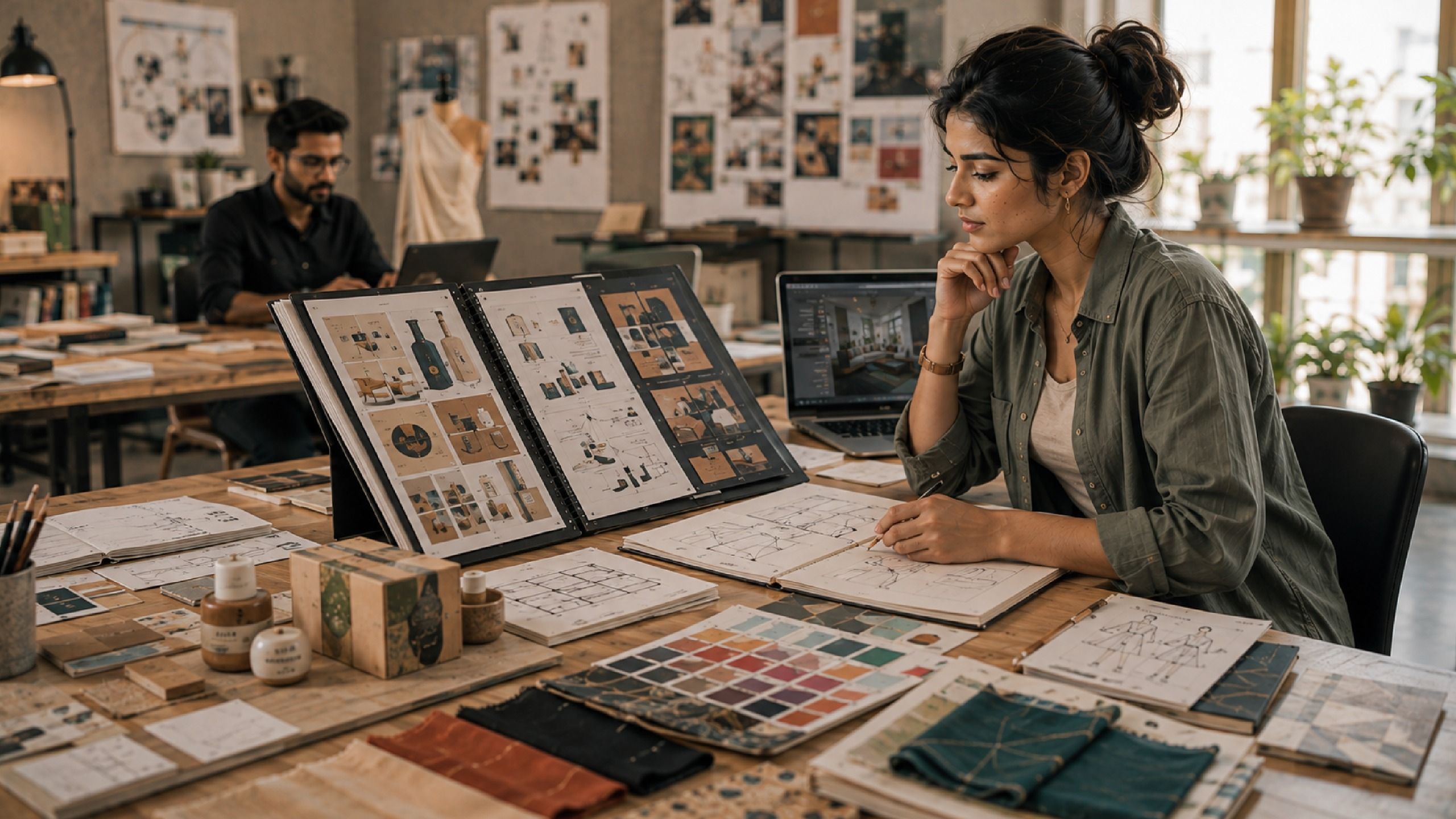
Fashion Design
If you are interested in clothing, textiles, styling and trends, fashion design can offer a wide range of opportunities.
You could explore apparel design, styling, fashion merchandising, costume design, fashion communication or brand development.
With experience, you could also work towards launching your own fashion label or boutique.
Interior Design
If you enjoy transforming spaces, interior design could be a natural choice.
Interior designers work across residential, commercial, retail and hospitality spaces. The field combines creativity with technical understanding, space planning, materials, project coordination and client management.
It can also lead to opportunities in interior design studios, real estate, retail and independent practice.
Graphic and Communication Design
For people who enjoy visual storytelling, graphic design and communication design offer opportunities across branding, advertising, digital media, publishing and marketing.
Designers can create visual identities, campaigns, digital content, packaging and communication experiences for brands.
Photography
If you enjoy capturing people, products, places and stories, photography can become both a creative profession and a business opportunity.
Professional photographers can explore fashion photography, product photography, advertising, events, food photography and digital content.
Product and Digital Design
The growth of technology has created new opportunities for designers working across products and digital experiences.
Product design, UX/UI design and digital design combine creative thinking with technology and problem-solving.
These fields can be particularly relevant for graduates who want to combine creativity with digital skills.

Build Skills That Employers Look For
Passion is a strong starting point, but professional success requires more.
Employers and clients look for creative professionals who can understand a brief, develop ideas and deliver work professionally.
Some valuable skills include:
- Creative thinking
- Design thinking
- Problem-solving
- Visual communication
- Digital design skills
- Communication
- Project management
- Presentation skills
- Collaboration
- Time management
- Business understanding
- Adaptability
- AI and emerging technology awareness
This combination of creative skills and professional skills can help graduates become more career-ready.
The creative professional of today is not just someone who can make something look good. They need to understand why it works, who it is for and how it can create value.
Learn From Industry, Not Just the Classroom
Creative careers are practical by nature.
That is why industry exposure can make a significant difference to the learning experience.
Workshops, industry interactions, live projects, internships, guest sessions and showcases can help students understand how creative work happens beyond the classroom.
For example, a fashion student can learn how a collection moves from concept to final garment. An interior design student can understand how a design concept is developed and executed for a real space.
These experiences can help students understand professional expectations and build confidence.
They can also help students begin developing a network of industry connections.
Turn Your Skills Into a Career
Learning a creative skill is only the beginning.
The next step is deciding how you want to use it.
Some graduates may choose employment with established companies. Others may prefer freelancing, consulting or entrepreneurship.
For example, a trained interior designer could work with an interior design firm, join a real estate company or build an independent practice.
A fashion graduate could work with a fashion brand, retail company or styling team, or start a label of their own.
A graphic designer could work at an agency, technology company or marketing team, or take on freelance projects.
This is one of the biggest advantages of creative careers: there can be multiple ways to build your professional journey.
From Creative Student to Creative Entrepreneur
Not every creative professional wants a traditional nine-to-five career.
Some want to build something of their own.
Creative entrepreneurship is becoming an increasingly attractive path for people who want to turn their skills and ideas into a business.
A fashion designer can build a clothing brand. An interior designer can establish a design studio. A photographer can create a specialised photography business. A graphic designer can build a branding agency.
However, entrepreneurship requires more than creative talent.
You also need to understand clients, pricing, marketing, finance, operations, branding and business development.
This is why combining creative education with business knowledge can be powerful for aspiring entrepreneurs.
Technology Is Changing Creative Careers
Technology is transforming almost every creative field.
From AI-powered tools and digital visualisation to 3D modelling and digital marketing, technology is becoming part of the creative workflow.
But technology does not remove the need for human creativity.
Instead, it can give creative professionals new ways to explore ideas, work faster and experiment with possibilities.
The future belongs to professionals who can combine human creativity with technology.
Learning digital tools alongside traditional creative skills can therefore help graduates stay adaptable in a changing industry.

Why Hamstech for Creative Education?
For students looking to build a creative career, the right learning environment matters.
Hamstech focuses on creative education across areas such as fashion design, interior design, communication design and other creative disciplines, helping learners develop practical skills alongside creative thinking.
The learning experience can extend beyond traditional classroom education through industry exposure, practical projects, workshops and opportunities to showcase creative work.
Hamstech also supports students who want to explore entrepreneurship through its Launchpad ecosystem, helping aspiring creative entrepreneurs understand how ideas can move towards business.
With industry-focused learning and exposure to creative professionals, students can work towards building the knowledge, skills and confidence required for their chosen career path.
Your Previous Degree Is Not a Limitation
One of the most important things to remember after graduation is that your career journey can evolve.
Your first degree does not have to determine every professional decision you make.
If you have discovered a passion for fashion, interiors, graphic design, photography, communication, product design or another creative field, you can explore it.
You can learn from the basics, develop advanced skills, create a portfolio, gain industry exposure and work towards a career that matches your interests.
You may choose to work with leading brands.
You may choose to join a creative studio.
You may choose to freelance.
Or you may decide to become a creative entrepreneur.
There is no single definition of a successful creative career.
What matters is finding a path that allows you to use your skills, ideas and imagination.
The Choice Is Yours
Finishing your degree does not mean you have to stop learning.
In fact, it can be the perfect time to ask yourself what you really want from your career.
If creativity has always been a part of who you are, you do not have to leave it as a hobby. With the right training, practical exposure and determination, you can work towards turning that interest into professional expertise.
Whether you are starting from the basics or looking to develop advanced creative skills, there is always room to learn, create and grow.
Your degree is one part of your story. Your career is yours to build.
And when it comes to a creative career, nothing is stopping you.
Ready to Turn Your Creativity into a Career?
Speak with our admissions experts to explore courses, career opportunities, placements, and entrepreneurship support at Hamstech.📞 Talk to an Expert: 9885420202
FAQs
1. Can I pursue a creative career after completing a non-creative degree?
Yes. You can enrol in a creative course after completing a degree in any field and develop specialised skills for a creative career.
2. Which creative courses can I pursue after graduation?
You can explore fields such as fashion design, interior design, graphic design, photography, communication design and other creative disciplines based on your interests.
3. Do I need a design degree to start a career in the creative industry?
Not necessarily. Professional creative education, practical training, industry exposure and a strong portfolio can help you build the skills needed for a creative career.
4. Can I switch to a creative career after working in another field?
Yes. A career change is possible at different stages. Learning new creative skills can help you move towards a field that matches your interests and strengths.
5. Can a creative course help me become an entrepreneur?
Yes. Along with creative skills, learning about branding, business and client management can help you explore creative entrepreneurship and build your own venture.