


Interior design is no longer limited to sketches, mood boards and physical samples. Today, digital technology is helping designers explore ideas, visualise spaces and present concepts in new ways. Artificial Intelligence (AI) is becoming an important part of this change, offering tools that can support different stages of the design process.
From generating room layouts to exploring colour combinations, AI in interior design is changing how designers approach their projects. However, creating a beautiful and functional space still requires creativity, technical knowledge and an understanding of the people who use it.
For students and aspiring interior designers, learning how AI works alongside traditional design methods can help them prepare for an evolving industry.
How Is AI Changing Interior Design?
AI tools can help designers explore multiple ideas, speed up certain tasks and communicate their concepts more clearly. Here are some ways the technology is being used.
1. Creating Design Concepts Faster
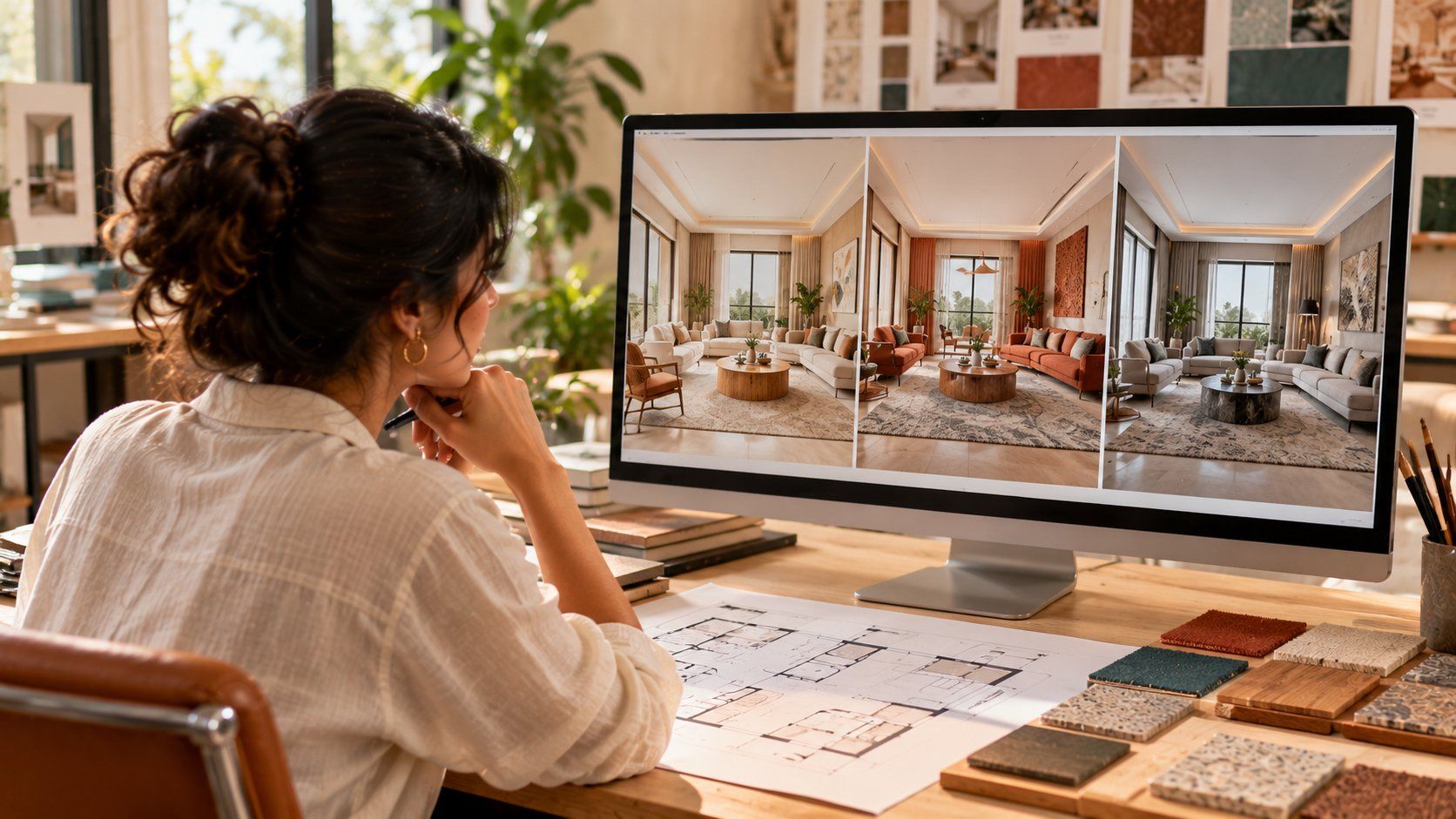
AI-powered design tools can generate room concepts from written descriptions, reference images or selected styles. Designers can explore different looks, furniture arrangements, materials and colour palettes without creating every variation manually.
These visuals can be useful during the early stages of a project. Designers can then select suitable ideas and refine them according to the client’s needs, budget and space.
2. Visualising Spaces Before Execution
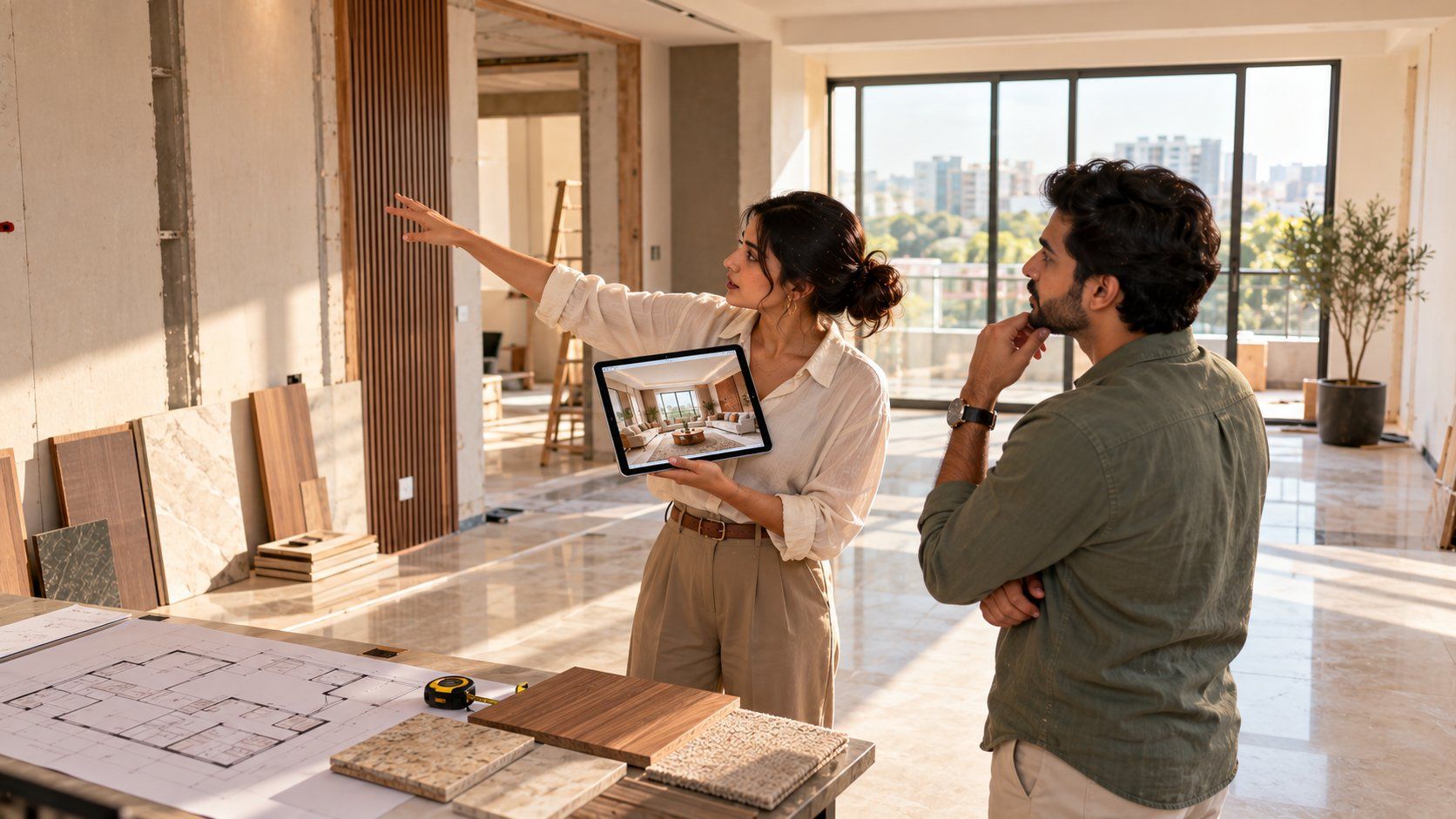
Helping clients imagine a finished room can be challenging when they see only floor plans or sketches. AI-assisted visualisation tools can create realistic-looking images of possible interiors.
Designers can use these visuals to communicate ideas about lighting, furniture, colours and materials. However, generated images may not accurately represent measurements, construction details or material behaviour, so technical drawings and professional checks remain important.
3. Exploring Colour Palettes and Materials
Choosing the right combination of colours, textures and finishes is an important part of interior design. AI tools can suggest palettes and generate visual variations based on a preferred style or reference.
These suggestions can help designers explore possibilities, but they should also consider lighting conditions, material samples, maintenance and the overall purpose of the space before making final decisions.
4. Supporting Space Planning
Interior designers need to make effective use of available space. Some digital tools can help explore furniture arrangements and layout options based on room dimensions and user requirements.
AI may support the early planning process by suggesting alternatives. Designers must still verify measurements, circulation space, accessibility, structural limitations and safety requirements before finalising a layout.
5. Understanding Client Preferences
AI can help organise client preferences and analyse information about styles, materials and design choices. This can support a more personalised design process.
For example, a designer may use a client’s preferred colours, lifestyle requirements and functional needs as a starting point for exploring suitable concepts. The final design must still reflect meaningful discussions with the client.
AI Tools and Technologies Interior Designers Can Explore
Different tools support different stages of interior design. Their features and capabilities vary, so designers should choose tools based on their project requirements.
- AI image generators: Help explore interior styles, mood boards and early design concepts from prompts or reference images.
- AI-assisted visualisation tools: Help create and refine visual representations of proposed spaces.
- Computer-Aided Design (CAD) software: Supports technical drawings, dimensions and detailed planning.
- 3D modelling and rendering tools: Help designers represent spaces, furniture and materials in three dimensions.
- AI-enabled planning tools: May help explore layout options and organise design information.
AI image generation, CAD and 3D modelling serve different purposes. A visually appealing AI image should not be treated as a substitute for accurate technical drawings or a build-ready design.
Interior Design Trends Influenced by AI
1. More Personalised Interiors
Designers can use AI-assisted tools to explore different styles and visual options for individual clients. This can make it easier to compare concepts before choosing a final direction.
2. Faster Concept Development
Generating multiple visual ideas can help designers review possibilities early in a project. This can support discussions with clients and reduce time spent manually creating every initial variation.
3. Smarter and More Functional Spaces
AI-supported planning may help designers explore layouts that respond to the needs of people using a space. Functionality, comfort and accessibility must remain central to the design process.
4. Digital Collaboration
Visualisations and shared digital references can help designers communicate concepts with clients, architects, contractors and other professionals. Clear communication remains essential to ensure that the proposed design can be implemented correctly.
Essential Skills Future Interior Designers Need
As AI becomes more accessible, future designers will benefit from combining technology skills with strong design fundamentals.
Creativity and visual thinking: The ability to develop original concepts and create spaces with a clear design identity remains essential.
Space planning: Understanding proportions, circulation, furniture placement and the practical use of space helps designers develop functional interiors.
Knowledge of materials and colours: Designers need to understand textures, finishes, lighting and material suitability, rather than relying only on digital images.
Digital design skills: Familiarity with relevant CAD, 3D modelling, rendering and AI-assisted tools can help designers communicate and develop ideas.
Problem-solving: Every project has different constraints, including budgets, dimensions, client needs and site conditions. Designers must evaluate options and find practical solutions.
Communication and client management: Listening to clients, presenting ideas clearly and working with other professionals are important parts of an interior designer’s role.
Responsible use of AI: Designers should review generated outputs for accuracy, originality and suitability. They should also consider privacy when using client information and respect copyright when working with reference images.
Will AI Replace Interior Designers?
AI is changing the way interior designers explore and present ideas, but it cannot independently account for every detail of a real project. Human judgement is needed to understand client expectations, assess site conditions, select suitable materials and coordinate implementation.
The future of interior design is likely to involve a combination of creative thinking, practical expertise and digital tools. Designers who understand both design fundamentals and emerging technology can be better prepared to adapt to new workflows.
Also Read: How Hamstech Helps Students Build Successful Careers in Interior Design and Entrepreneurship
How Can Aspiring Interior Designers Prepare?
Students interested in interior design should begin by building a strong foundation in drawing, space planning, colour theory, materials and design principles. They can then explore CAD software, 3D visualisation and AI-assisted tools to understand how technology supports different stages of a project.
Working on design projects and developing a portfolio can also help students demonstrate their ideas and problem-solving abilities.
At Hamstech, students can explore interior design education through programmes focused on creative and practical design learning. Prospective students should review the current curriculum, eligibility requirements and available programme details to understand how the course matches their goals.
Ready to explore a future in interior design? Visit Hamstech to discover available programmes and take the first step towards developing your creative skills.
Ready to Turn Your Creativity into a Career?
Speak with our admissions experts to explore courses, career opportunities, placements, and entrepreneurship support at Hamstech📞 Talk to an Expert: 9885420202
Frequently Asked Questions
1. What is AI in interior design?
AI in interior design refers to using artificial intelligence tools to support tasks such as generating design concepts, exploring colour palettes, visualising spaces and considering layout options.
2. How does AI help interior designers?
AI can help designers explore ideas faster, create visual references and compare possible design directions. Designers must still verify dimensions, materials, safety and other practical requirements.
3. Which AI tools can interior designers use?
Designers can explore AI image generators, AI-assisted visualisation platforms and AI-enabled planning tools, alongside CAD, 3D modelling and rendering software. The right choice depends on the project and the required output.
4. Will AI replace interior designers?
AI may automate or support some tasks, but interior design also requires creativity, technical knowledge, client communication and on-site problem-solving. Human expertise remains important.
5. What skills should future interior designers learn?
Important skills include space planning, colour theory, material knowledge, creativity, CAD, 3D visualisation, problem-solving and communication. Familiarity with AI tools can complement these fundamentals.