

Content creation has become an important part of how businesses, brands and individuals connect with people online. From Instagram posts and YouTube videos to product photographs and digital advertisements, creative content helps communicate ideas, share stories and build an online presence.
If you enjoy taking photographs, editing videos or creating visual designs, content creation could be an interesting career path to explore. However, becoming a content creator involves more than posting regularly on social media. It requires creativity, planning, technical skills and an understanding of what audiences enjoy.
If you want to learn how to become a content creator, developing skills in photography, video editing and graphic design can help you create engaging content for different platforms.
What Does a Content Creator Do?
A content creator develops material for digital platforms to inform, entertain, educate or engage an audience. Depending on their interests, they may create photographs, videos, graphics, tutorials, reviews or other forms of digital content.
Content creators can work independently, collaborate with brands or join creative teams in businesses and agencies. Some focus on one platform or content format, while others combine different skills to create a complete digital experience.
Their work often includes planning content ideas, shooting photographs or videos, editing visuals, writing captions and reviewing audience engagement.
1. Learn Photography Skills
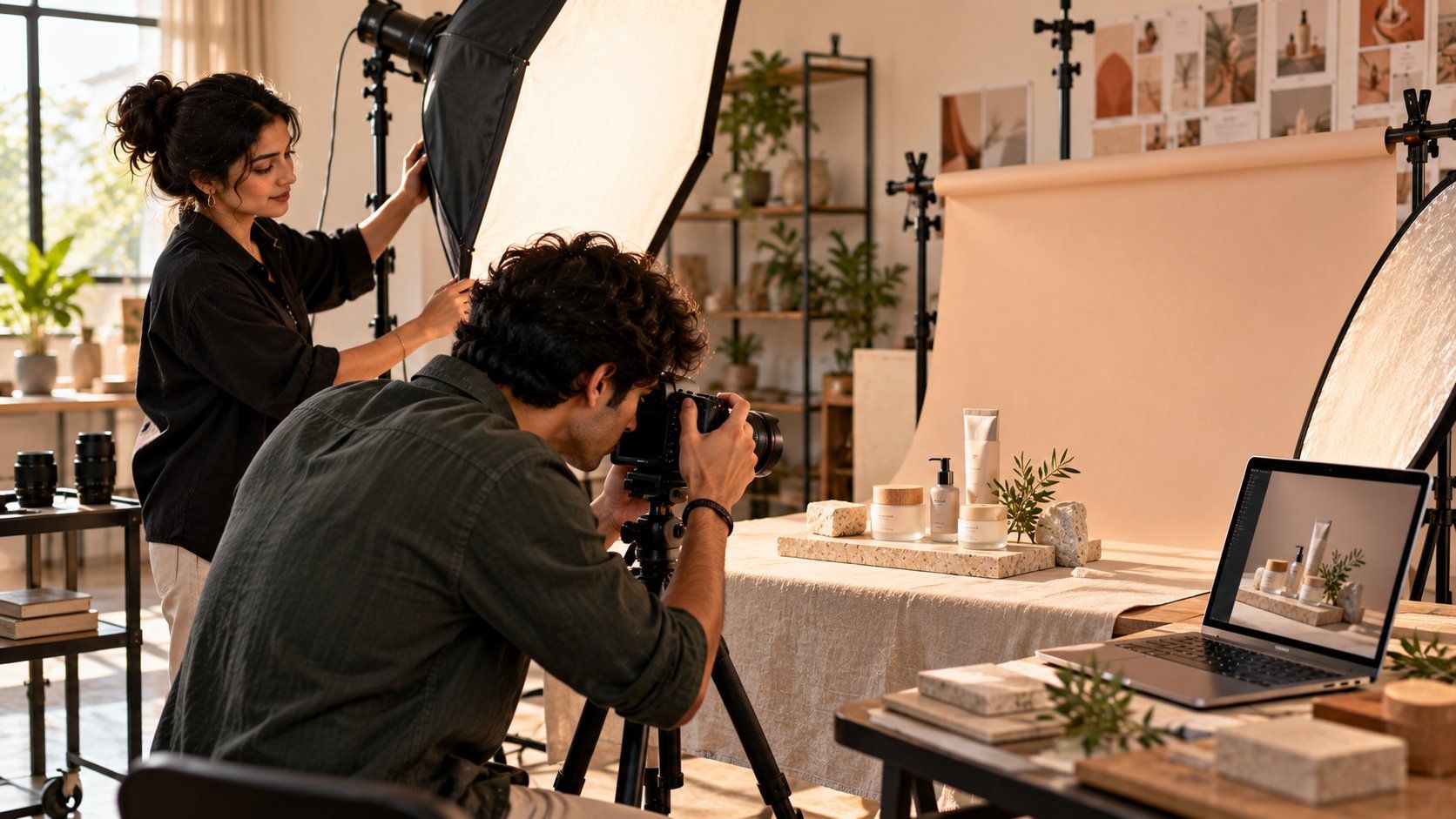
Photography is an important skill for content creators who want to produce clear, attractive and meaningful visuals. Good photographs can help tell a story, showcase a product or make a social media post more engaging.
You do not always need expensive equipment to begin. Understanding the basics and practising regularly can help you improve your results.
Essential photography skills include:
- Composition: Learn how to arrange subjects within a frame to create balanced and interesting images.
- Lighting: Understand natural and artificial lighting and how they affect the appearance of a photograph.
- Camera basics: Learn about focus, exposure, shutter speed, aperture and ISO, depending on the equipment you use.
- Colour and styling: Explore how backgrounds, props and colour combinations influence the overall image.
- Product and lifestyle photography: Practise capturing products, food, fashion, people and everyday moments.
Start by photographing subjects around you. Review your images, identify what could improve and experiment with different angles and lighting conditions.
2. Develop Video Editing Skills
Videos are widely used for tutorials, product demonstrations, interviews, reels and short-form entertainment. Video editing helps turn raw footage into a clear, engaging story.
Learning to edit videos can help you create content that suits different platforms and audience preferences.
Important video editing skills include:
- Cutting and sequencing: Arrange clips in a logical order and remove unnecessary footage.
- Transitions and pacing: Use transitions thoughtfully and maintain a rhythm that suits the content.
- Audio editing: Balance dialogue, background music and sound effects.
- Colour correction: Adjust brightness, contrast and colour for a consistent look.
- Text and subtitles: Add titles, captions and other information to improve clarity.
- Platform formats: Learn to prepare videos in suitable dimensions and lengths for different platforms.
You can begin with beginner-friendly editing software and gradually explore more advanced tools as your skills improve. Practise by creating short videos, such as a product showcase, a behind-the-scenes clip or a simple tutorial.
3. Build Graphic Design Skills
Graphic design helps content creators communicate messages through visuals. It is useful for social media posts, thumbnails, posters, presentations, promotional creatives and digital advertisements.
Understanding basic design principles can make your content more organised and visually consistent.
Essential graphic design skills include:
- Typography: Choose fonts that are readable and suit the message.
- Colour theory: Understand how colours work together and influence visual communication.
- Layout and hierarchy: Arrange text and images so viewers can identify the most important information quickly.
- Image selection: Use appropriate photographs, illustrations and graphic elements.
- Brand consistency: Maintain a consistent visual style across posts and platforms.
Practise creating social media graphics, video thumbnails and promotional posts. Save your strongest work in a portfolio to show your progress and creative approach.
4. Understand Your Audience and Platform
Technical skills are only one part of content creation. You also need to understand who you are creating content for and what they may find useful or interesting.
Choose a subject that matches your interests, such as fashion, food, travel, beauty, photography, technology or education. Research the type of content audiences engage with and develop ideas that offer value.
Different platforms also have different content formats and audience expectations. A short vertical video, a detailed tutorial and a product photograph may require different approaches.
Experiment with formats, review performance and learn from audience feedback rather than relying only on trends.
5. Create a Portfolio and Practise Consistently
A portfolio allows you to showcase your skills and demonstrate the quality of your work. You do not need to wait for paid projects to start building one.
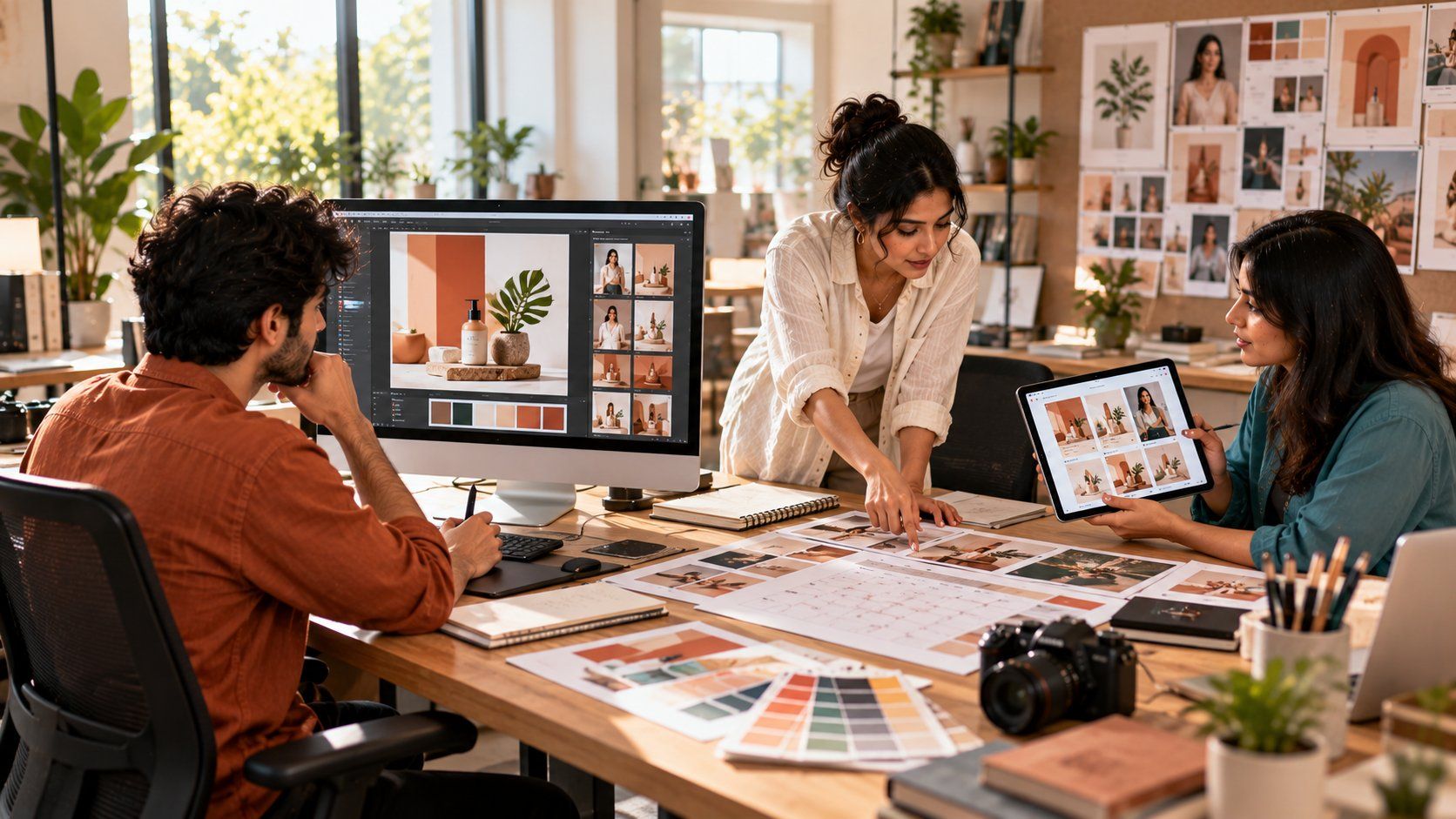
Create sample photographs, edit short videos and design graphics around a subject you enjoy. Select your strongest work and organise it into clear categories.
Consistency is also important. Set realistic content goals, plan your ideas in advance and leave time for shooting, editing and reviewing your work.
As you improve, you can explore freelance projects, internships, collaborations or opportunities with brands and creative agencies.
6. Explore AI and Digital Tools
AI-powered tools can support content creation by helping with brainstorming, image editing, captions, visual concepts and parts of the video production process.
However, AI should support your creative decisions rather than replace them. You still need to check the accuracy, originality and quality of your content, and respect copyright and privacy.
Learning how to combine creative judgement with digital tools can help you develop a more flexible approach to content creation.
Also Read: Turn Your Creative Streak into a Career: Exploring Creative Careers in India
How Can You Start a Career in Content Creation?
If you are interested in becoming a content creator, start by identifying the type of content you enjoy making. Build your photography, video editing and graphic design skills through practice and small projects.
You can also explore courses that help you understand visual communication, photography, design software and digital content production. A structured learning environment can provide guidance as you develop your skills and portfolio.
At Hamstech, students can explore creative education in areas such as Photography and Graphic Design, depending on the programmes currently available. Visit the official website to review course details and find options that match your interests
Ready to Turn Your Creativity into a Career?
Speak with our admissions experts to explore courses, career opportunities, placements, and entrepreneurship support at Hamstech📞 Talk to an Expert: 9885420202
Frequently Asked Questions
1. How do I become a content creator?
Start by choosing a topic you enjoy, learning photography, video editing or graphic design, and practising through small projects. Build a portfolio, publish content consistently and learn from audience feedback.
2. What skills does a content creator need?
Important skills include photography, video editing, graphic design, storytelling, communication, content planning and audience research.
3. Do I need a professional camera to become a content creator?
No. You can start with a smartphone and learn lighting, composition and editing. You can invest in more equipment as your skills and needs grow.
4. Is video editing important for content creators?
Yes. Video editing helps organise footage, improve pacing, balance audio and tell stories effectively. It is useful for reels, tutorials, product videos and other digital content.
5. Can graphic design help me become a content creator?
Yes. Graphic design helps you create social media posts, thumbnails, promotional graphics and other visual content while maintaining a consistent style.