


Lighting is one of the most important elements of photography. Whether you are capturing portraits, landscapes, products or fashion photographs, the way light falls on your subject can completely transform the final image. Good lighting enhances colours, highlights details, creates depth and sets the mood of a photograph.
For aspiring photographers, understanding photography lighting basics is an essential step towards creating visually appealing images. Learning how to control natural and artificial light helps photographers experiment with different styles and develop their creative abilities.
This guide explores the different types of lighting, essential techniques and practical tips to help beginners improve their photography skills.
What Is Lighting in Photography?
Lighting in photography refers to the way light illuminates a subject and influences its appearance in an image. It affects brightness, contrast, shadows, textures, colours and the overall atmosphere of a photograph.
Photographers use lighting to direct attention, emphasise specific features and communicate emotions.
For example, soft lighting can create a gentle, flattering portrait, while dramatic side lighting can produce strong shadows and a more intense visual effect.
Understanding how light behaves allows photographers to make creative decisions rather than depending entirely on available lighting conditions.
Types of Lighting in Photography
Understanding the different types of lighting in photography helps beginners select suitable lighting conditions for various subjects.
1. Natural Lighting
Natural lighting comes primarily from sunlight and is widely used in portrait, fashion, landscape and lifestyle photography.
Its intensity, colour and direction change throughout the day.
Morning and late-afternoon sunlight often produces warm tones and softer shadows, while direct midday sunlight can create strong contrasts.
Beginners can practise natural lighting by photographing subjects near windows or outdoors.
2. Artificial Lighting
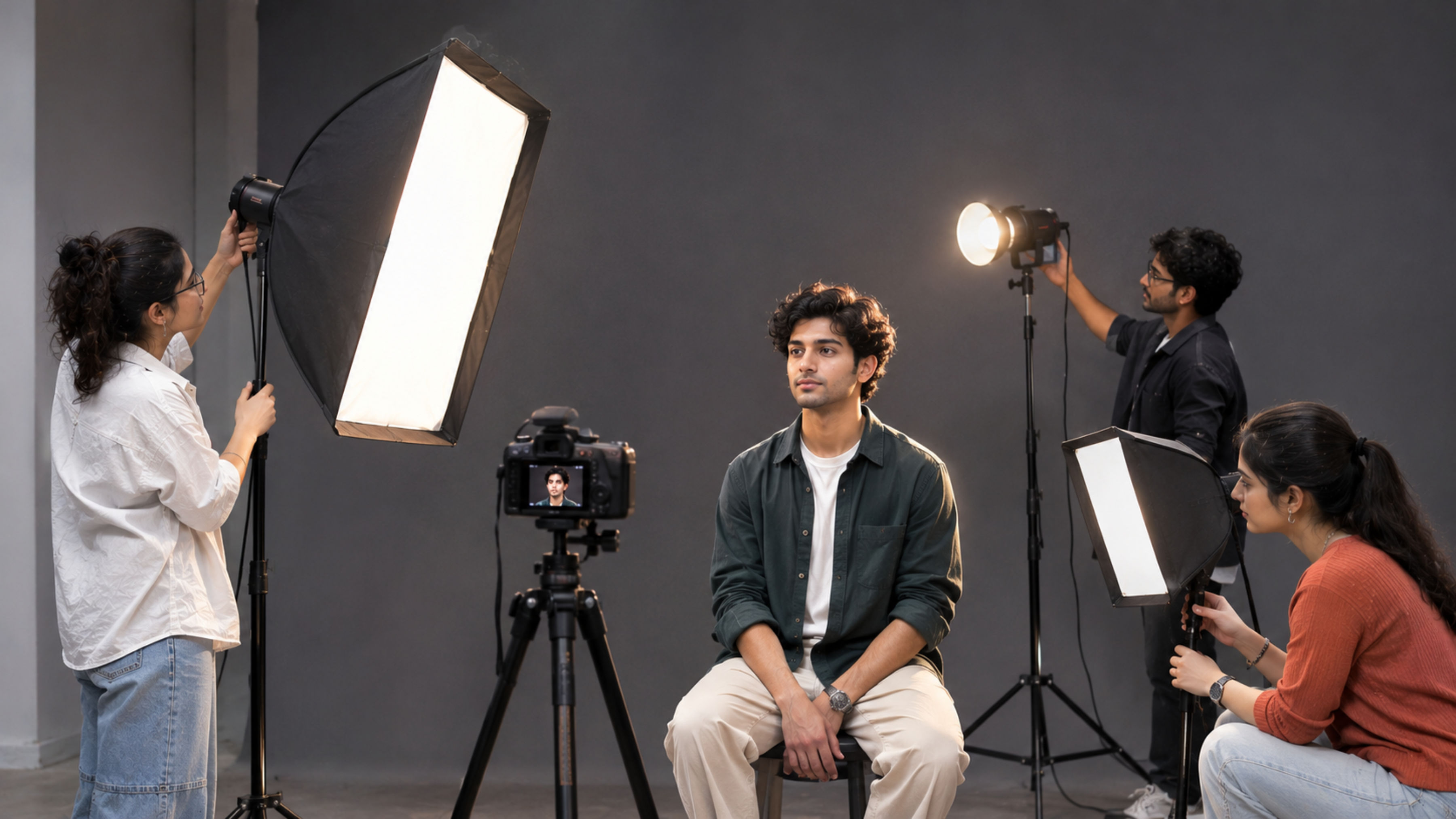
Artificial lighting involves using equipment such as studio lights, LED panels, flash units and softboxes.
It allows photographers to control brightness, direction and lighting conditions.
Artificial light is particularly useful for studio portraits, product photography and indoor fashion shoots where consistent illumination is important.
3. Soft Lighting
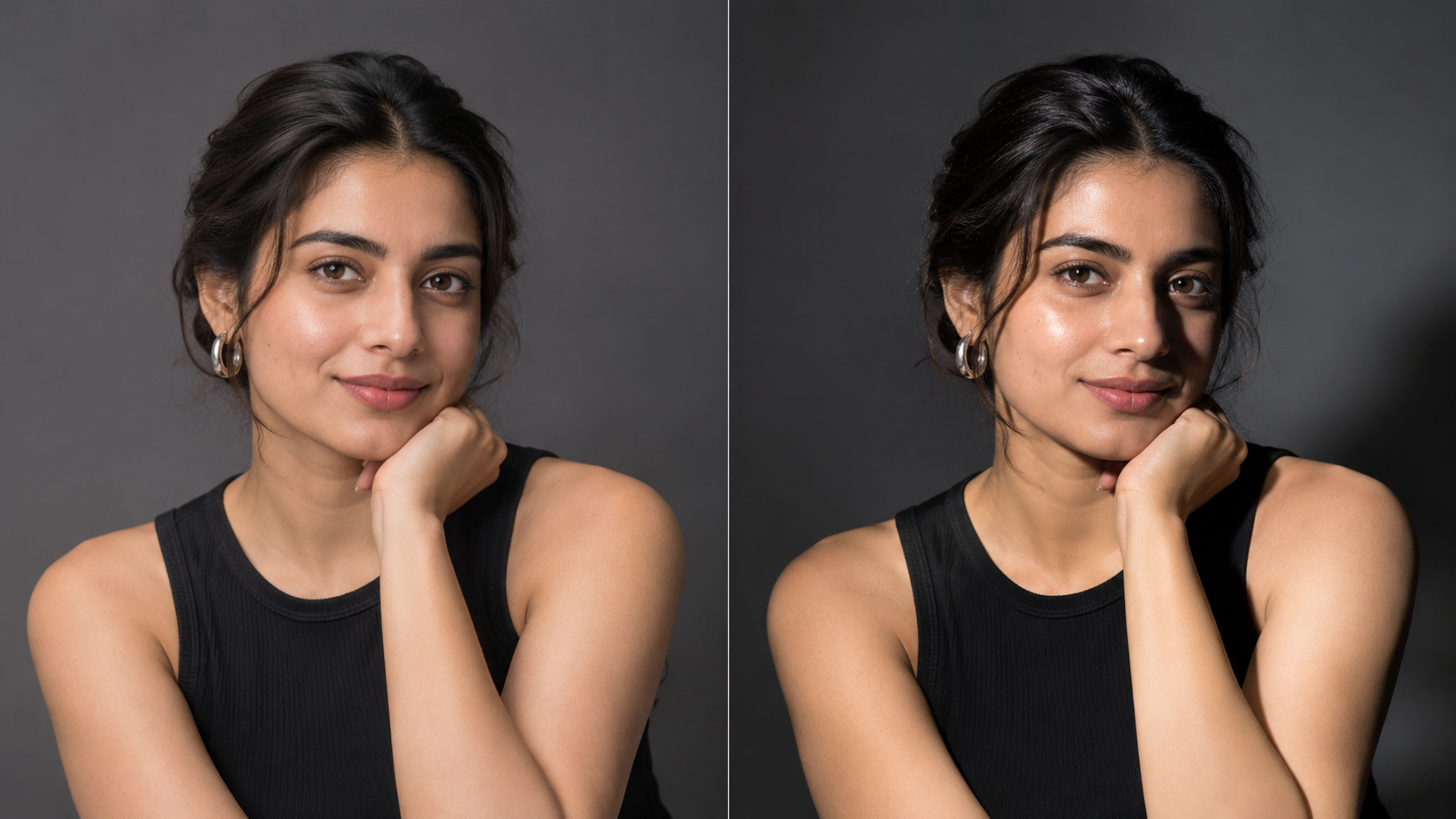
Soft lighting creates gentle transitions between highlights and shadows, reducing harsh contrasts.
It is commonly achieved using large light sources, diffusers, softboxes or indirect window light.
This lighting style is often preferred for beauty portraits, fashion photography and product images requiring smooth, even illumination.
4. Hard Lighting
Hard lighting produces clearly defined shadows and strong contrast between bright and dark areas.
Direct sunlight or a small, undiffused light source can create this effect.
Photographers use hard lighting to highlight textures, emphasise shapes and create dramatic compositions.
Essential Photography Lighting Techniques
Learning different photography lighting techniques helps photographers control how their subjects appear.
1. Front Lighting
Front lighting occurs when the light source is positioned in front of the subject, usually near the camera.
It illuminates the subject evenly and reduces visible shadows, making it useful for straightforward portraits and product photographs.
However, excessive front lighting can make images appear flat.
2. Side Lighting
Side lighting illuminates a subject from one direction, creating highlights on one side and shadows on the other.
This technique adds depth, dimension and texture, making it suitable for portraits, still-life photography and artistic compositions.
3. Backlighting
Backlighting occurs when the main light source is positioned behind the subject.
It can create silhouettes, glowing edges and atmospheric effects.
Photographers often use backlighting during sunrise or sunset to capture visually striking outdoor portraits.
4. Three-Point Lighting
Three-point lighting is a common studio setup involving three light sources.
- Key Light: The primary light illuminating the subject.
- Fill Light: Reduces shadows created by the key light.
- Back Light: Helps separate the subject from the background.
This technique is widely used in portrait photography, commercial shoots and video production.
Photography Lighting Tips for Beginners
Learning photography lighting for beginners becomes easier through observation and regular experimentation.
Start with Natural Light: Practise photographing subjects near windows or outdoors before investing in lighting equipment.
Observe Light Direction: Notice how moving a subject or light source changes shadows and facial features.
Experiment with Shadows: Shadows can add depth and interest rather than simply making a photograph darker.
Use Reflectors: A reflector can redirect available light towards darker areas, helping balance exposure.
Understand Colour Temperature: Warm and cool lighting conditions influence the atmosphere and colour balance of photographs.
Avoid Overexposure: Check your camera settings to prevent bright areas from losing important details.
Practising these techniques across different subjects helps develop confidence and creative control.
Common Lighting Mistakes to Avoid
Beginners often focus on camera settings without considering how lighting affects their photographs.
Using harsh overhead lighting can create unflattering shadows, particularly in portraits. Combining different light sources without adjusting white balance can also produce inconsistent colours.
Another common mistake is positioning subjects without considering the background, which may introduce distracting shadows.
Learning to observe the entire scene before taking a photograph can help avoid these issues.
Ready to Turn Your Creativity into a Career?
Speak with our admissions experts to explore courses, career opportunities, placements, and entrepreneurship support at Hamstech📞 Talk to an Expert: 9885420202
Learn Photography Lighting Through Practical Experience
Understanding lighting is an important step towards developing professional photography skills. From natural daylight to advanced studio setups, every lighting technique offers opportunities to experiment with mood, composition and visual storytelling.
At Hamstech College of Creative Education, aspiring photographers can explore photography fundamentals, lighting techniques, camera handling and practical creative applications through structured learning.
By mastering photography lighting basics, beginners can develop the confidence to capture compelling photographs and explore creative opportunities in portrait, fashion, product and commercial photography.
Ready to build your photography career? Explore 👉 Hamstech’s Photography Course!
Frequently Asked Questions
1. What are the basics of lighting in photography
Photography lighting basics include understanding light direction, intensity, quality, colour temperature and shadows. Mastering these elements helps photographers control exposure, highlight details and create visually appealing compositions.
2. What are the different types of lighting in photography?
The main types of lighting in photography include natural lighting, artificial lighting, soft lighting and hard lighting. Each type creates different visual effects and can be used across portrait, fashion, landscape and product photography.
3. What is the best photography lighting setup for beginners?
Natural window light is one of the easiest and most affordable lighting setups for beginners. As photographers develop their skills, they can experiment with reflectors, LED panels, softboxes and three-point lighting setups to achieve more professional results.
4. Why is lighting important in professional photography?
Lighting influences the brightness, contrast, colours, textures and overall mood of a photograph. Professional photographers use lighting techniques to enhance subject details, create depth and communicate emotions through effective visual storytelling.
5. Where can I learn professional photography and lighting techniques in Hyderabad?
Hamstech College of Creative Education offers Photography courses in Hyderabad that help aspiring photographers develop skills in camera handling, natural and studio lighting, composition, fashion photography, product photography and visual storytelling through practical learning and industry exposure.